|

Share Article
Every person who tracks food intake knows that hitting protein goals on a plant-based diet is hard. And every recipe search just sends you back to tofu.
Here’s the thing: the plant-based protein world is way bigger than a block of white soy curd.
From chewy seitan that logs like a steak to lentil dishes that quietly rack up 18g per bowl, high-protein vegetarian recipes have never been more exciting or more trackable.
This blog is built specifically for food-tracker users. By the end, you’ll have a solid rotation of tofu-free meals that hit your targets and taste like something you’d actually want to eat.
The Protein Powerhouse Pantry: 8 Ingredients to Stock Right Now
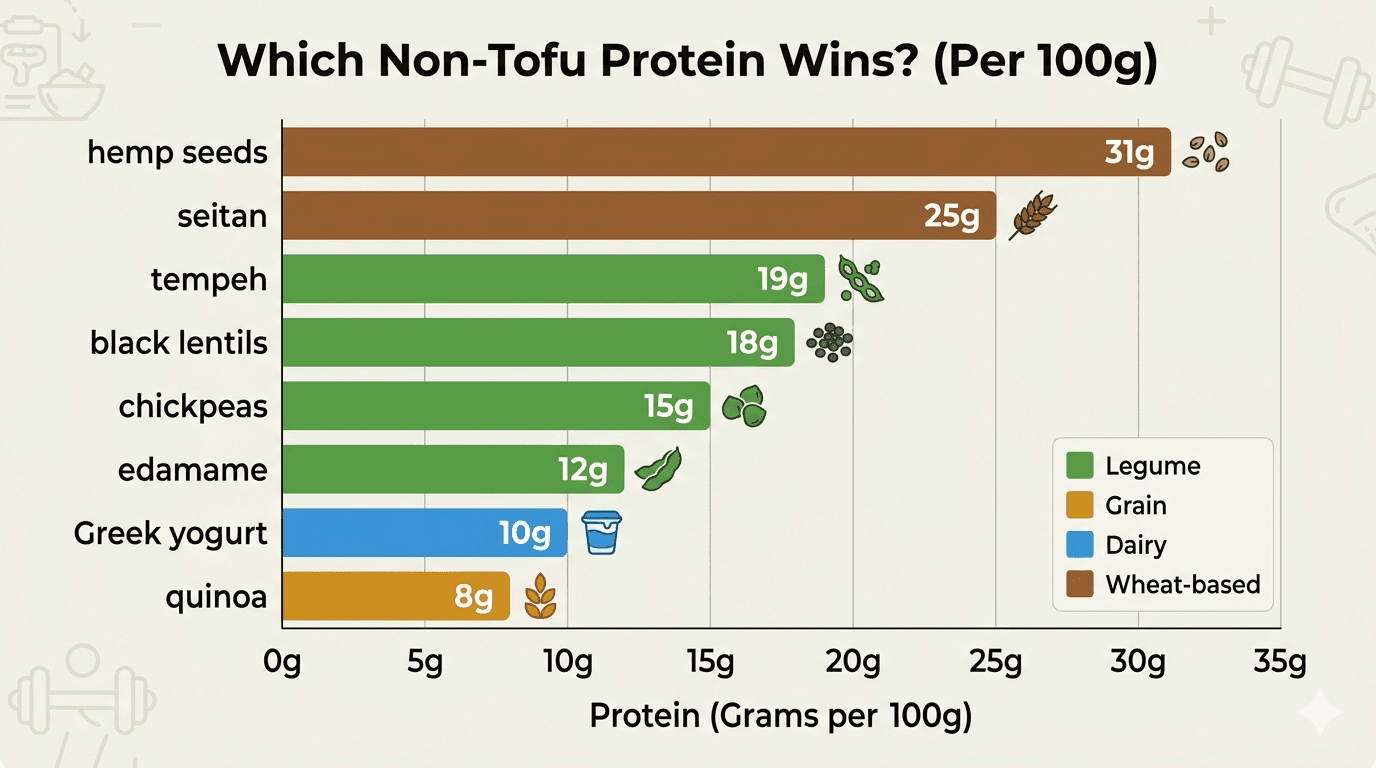
Before we get into recipes, let’s talk building blocks. These eight ingredients will anchor every high-protein, tofu-free meal you make.
1. Seitan (Wheat Meat)
Seitan is probably the most underused protein in home vegetarian cooking. A 100g serving has 24.7g of protein, 9.4g of carbs, and only 2.4g of fat.
Made from vital wheat gluten, it’s dense and chewy and holds up great in stir-fries, stews, and on the grill. One caveat, though, is that it’s not for anyone with celiac disease or gluten intolerance.
2. Tempeh
Tempeh is everything tofu isn’t. It’s known to be nutty, dense, and earthy. A three-ounce serving gets you 15 to 16 grams of protein. Since tempeh is fermented, it’s easier to digest than most legumes. You can slice it thin and pan-crisp it into bacon strips or crumble it into taco filling.
3. Lentils
A cooked cup of lentils delivers around 18g of protein plus a serious fiber hit. Red lentils go creamy and soft, which makes them great for soups and dals. On the other hand, green and black lentils hold their shape, so they work well in salads and grain bowls. They’re also cheap, which matters a lot when you’re batch-cooking for the week.
4. Chickpeas
At least 15g of protein per serving, and endlessly versatile. When preparing chickpeas, you can roast them crispy for salad toppers, blend them into hummus, simmer them in curry, or mash them into a scramble. The liquid from the can (aquafaba) even works as a protein-rich egg substitute in baking.
5. Greek Yogurt
For lacto-vegetarians, Greek yogurt is basically a macro cheat code. Plain Greek yogurt packs 13g of protein or more per serving.
We recommend that you use it as a base for overnight oats, a sauce thickener, or a sour cream swap in Mexican bowls. Go non-fat to maximize your protein-to-calorie ratio, or full-fat if you want extra healthy fats.
6. Quinoa
Most grains are low in protein. Quinoa is different. It’s a complete protein with all nine essential amino acids, and a cooked cup gives you 8g.
Quinoa makes a great base for bowls and salads where you want the starch and the protein to both count.
7. Edamame
One of the most convenient high-protein snacks out there. A cup delivers 12g of protein. Toss it into grain bowls, blend it into a dip, or eat it straight from the pod with some flaky salt. It’s also high in iron, which is worth paying attention to on a vegetarian diet.
8. Hemp Seeds
Three tablespoons of hemp seeds sprinkled onto basically anything adds around 10g of protein. They are a complete protein, high in omega-3s, and almost completely flavorless. If you want to improve your smoothies, oatmeal, salads, or yogurt bowls, hemp seeds are the easiest stealth protein upgrade you’re probably not using yet.
5 High-Protein Breakfast Recipes
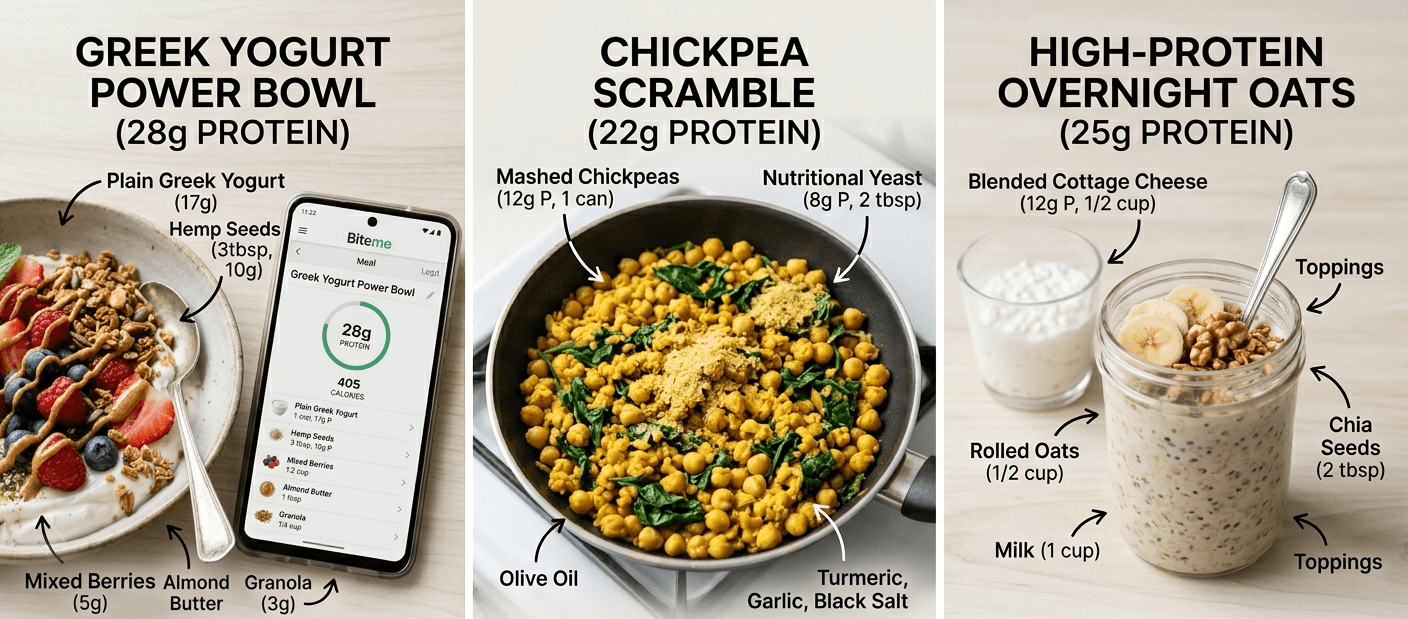
Breakfast is where most vegetarians drop the ball on protein. A bowl of oatmeal with fruit feels healthy, but it might only get you 5 to 8 grams. That’s not enough to stabilize blood sugar or fuel a morning workout.
Here are some of the recipes that can fix that:
Greek Yogurt Power Bowl (28g Protein)
The weekday champion for anyone who needs high protein with zero cooking. You can start with plain Greek yogurt (17g), add 3 tablespoons of hemp seeds (10g), then top with mixed berries, a drizzle of almond butter, and a little granola.
Log it on Biteme, and you’re looking at 28 to 30 grams of protein for around 400 calories.
Chickpea Scramble (22g Protein)
Drain and roughly mash one can of chickpeas, then sauté with olive oil, turmeric, garlic, black salt, and nutritional yeast. You may also fold in spinach or kale at the end. The two tablespoons of nutritional yeast add 8g of protein and a solid hit of B12, a nutrient vegetarians need to actively supplement.
Overnight Oats with Cottage Cheese (25g Protein)
Cottage cheese in oats sounds wrong until you try it. In this recipe, blend half a cup of cottage cheese smoothly, then mix with half a cup of rolled oats, 1 cup of milk, 2 tablespoons of chia seeds, and whatever sweetener you like.
Overnight, the cottage cheese disappears into the oats completely. No lumps, just a thick creamy base that logs at around 25 grams of protein.
High-Protein Vegetarian Meals for Midday
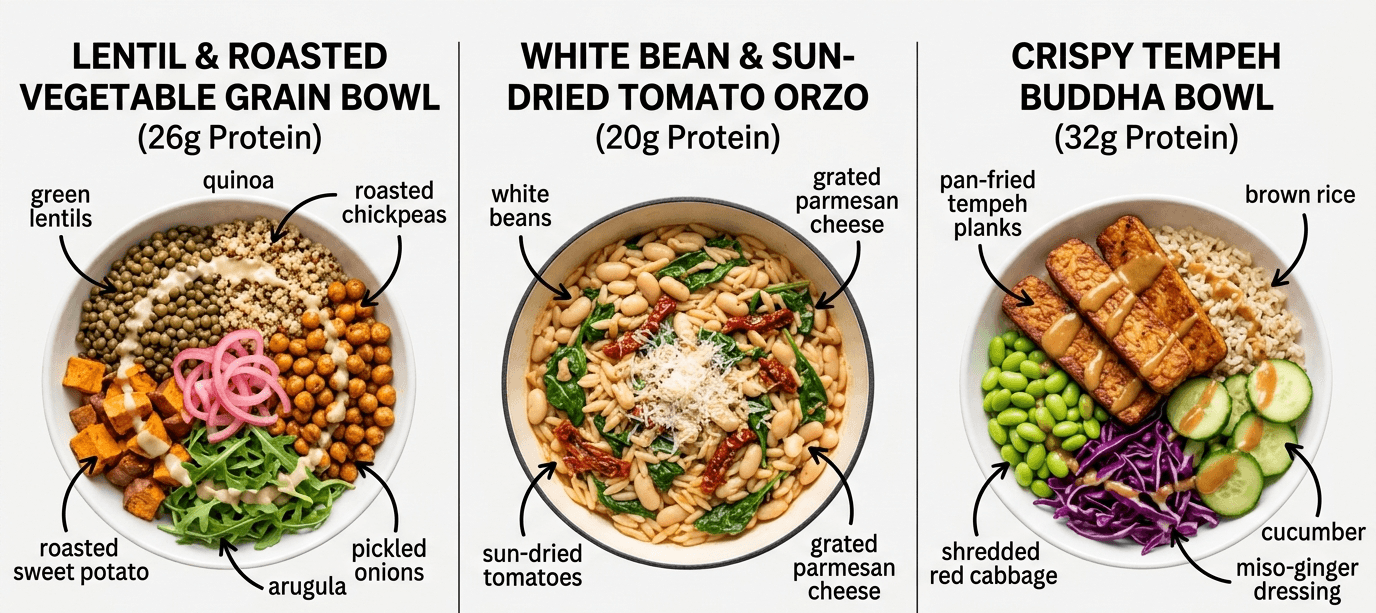
Lunch is where plant-based eaters either nail their protein goals or fall way behind. These recipes are built for batch cooking on Sunday and logging all week.
Lentil and Roasted Vegetable Grain Bowl (26g Protein)
Cook 1 cup cooked green lentils (18g), half a cup of quinoa (4g), roasted chickpeas (4g), and tahini-lemon dressing. You can top this vegetable dish with roasted sweet potato, arugula, and pickled onions.
One reason this works so well for tracking is that every component is individually loggable. Bowls with clearly separated ingredients are way easier to log accurately than one-pot dishes where you’re basically guessing at portions.
White Bean and Sun-Dried Tomato Orzo (20g Protein)
A one-pot pasta with white beans, spinach, and sun-dried tomatoes. White beans do the heavy lifting at 15g of protein per cup, and orzo adds another 6g per serving.
If you eat dairy, throw in some grated Parmesan, and you’re pushing 22 to 24g. This meal also checks the complete protein box since the beans’ lysine pairs with the grain’s methionine.
Crispy Tempeh Buddha Bowl (32g Protein)
First, slice tempeh into thin planks, marinate in tamari, smoked paprika, and garlic, then pan-fry until deeply golden. Then, serve over brown rice with steamed edamame, shredded red cabbage, cucumber, and a miso-ginger dressing.
Tempeh brings 21g per 4 ounces; edamame adds 12g per cup. With this lunch meal, you can hit your portions right without much effort.
High-Protein Dinner Recipes That Actually Satisfy
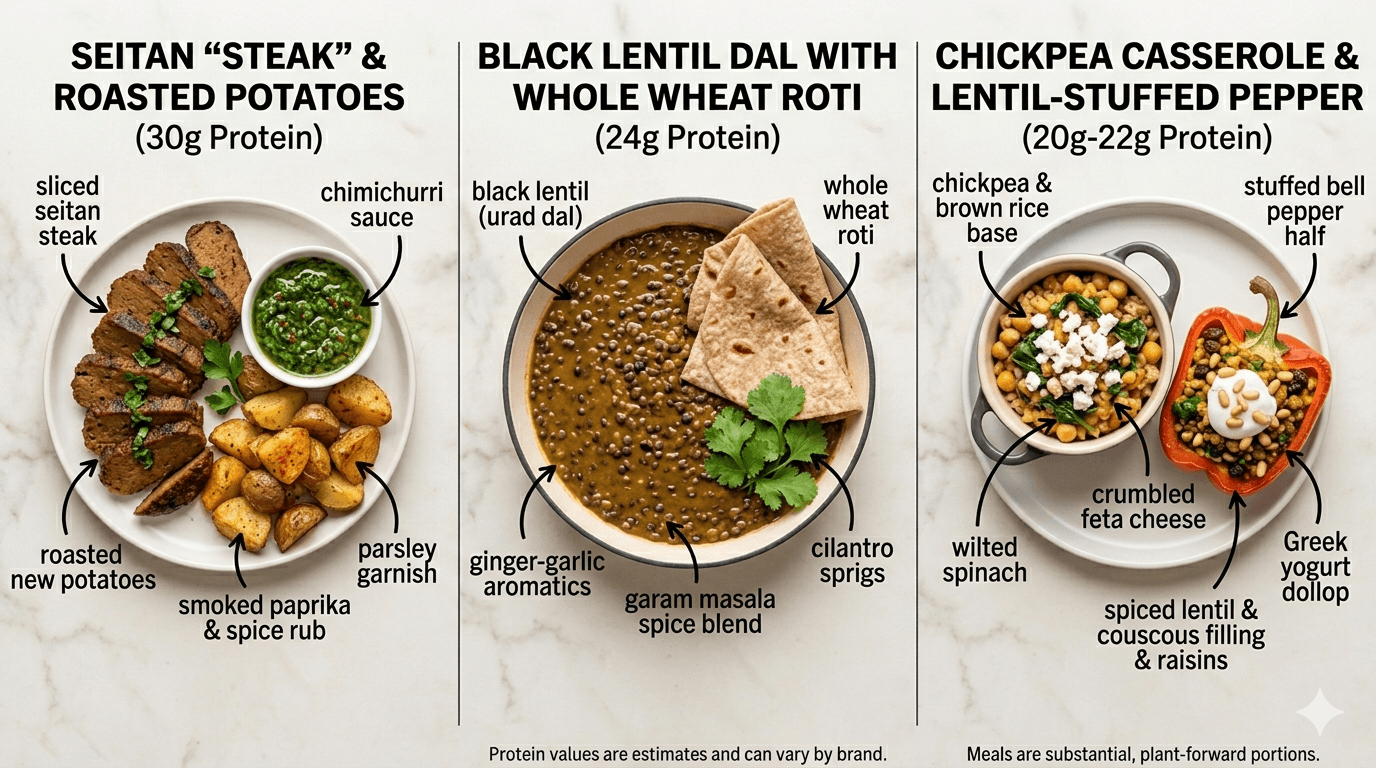
These recipes are designed to feel substantial, not like a side dish that forgot to invite the main course.
Seitan “Steak” with Chimichurri (30g Protein)
Seitan does best when you treat it like meat.
Sear it hard in a hot cast-iron pan until a crust forms, then rest it and slice against the grain. Next, season with smoked paprika, cumin, garlic powder, and black pepper. Lastly, serve with chimichurri (parsley, garlic, olive oil, red wine vinegar) and roasted potatoes. It delivers more protein per gram than some animal meats, with significantly less fat and fewer calories.
Black Lentil Dal with Whole Wheat Roti (24g Protein)
Black lentils (urad dal) are one of the most protein-dense legumes around.
A cup has 18g of protein, plus solid iron and folate. Simmer with tomatoes, ginger, garlic, cumin, coriander, and garam masala until silky. Then, you need to pair with two small whole wheat rotis (about 5g of protein each) for a total of 24 to 28g protein.
The lentil and roti combo is also a textbook example of complementary plant proteins doing exactly what they’re supposed to.
Chickpea Casserole with Spinach and Feta (22g Protein)
Want a recipe that you can do in one pan? Try this chickpea casserole recipe!
Chickpeas (15g per cup) carry the protein load. Mix in spinach, brown rice, a little cream cheese, and crumbled feta. Once combined, you have an additional 5 to 7g of protein.
Spiced Lentil-Stuffed Peppers (20g Protein)
For our last recipe, you need to fill halved bell peppers with a mix of cooked green lentils, couscous, caramelized onions, raisins, toasted pine nuts, and warm spices like cinnamon, allspice, and cumin. Finish with a dollop of Greek yogurt or labneh.
The lentil and couscous combo gives you protein and that satisfying grain-forward fullness that makes dinner actually feel like dinner.
Conclusion
Did one of these recipes surprise you? Whether it was seitan making its debut in your kitchen or you finally cracked a lentil dal that your whole household loved.
Ready to hit your protein goals without opening another block of tofu? Download Biteme today and start logging your high-protein dishes.
References
Cleveland Clinic Health Essentials — “13 of the Best Vegetarian and Vegan Protein Sources.” Cleveland Clinic. https://health.clevelandclinic.org/13-of-the-best-vegetarian-and-vegan-protein-sources
Whole Foods Market — “Top Sources of Vegetarian Protein.” Whole Foods Market. https://www.wholefoodsmarket.com/special-diets/top-sources-vegetarian-protein
EatingWell (Reviewed by Jessica Ball, M.S., RD) — “23 High-Protein Vegetarian Meals That Aren’t Tofu.” EatingWell. https://www.eatingwell.com
Alibaba Wellness — “Seitan and Muscle Building Guide: How to Use It Effectively.” https://wellness.alibaba.com/nutrition/is-seitan-good-for-muscle-building-
SnapCalorie Nutrition Database — “Seitan Nutrition Facts.” https://www.snapcalorie.com/nutrition/seitan_nutrition.html
Share Article
Recent Posts